Hydraulic systems depend on clean hydraulic oil to transmit power and control equipment movement accurately. In excavators, industrial presses, agricultural machinery, and other hydraulic equipment, even small solid particles can contribute to component wear and unstable operation. A properly selected Hydraulic Filter Element helps control these contaminants before they circulate through sensitive components, supporting equipment reliability and reducing unnecessary maintenance costs.
However, effective hydraulic filtration involves more than simply removing visible dirt. Filter media, filtration efficiency, flow capacity, differential pressure, and sealing performance all influence how well a filter protects a hydraulic circuit. Understanding these factors helps equipment manufacturers, maintenance teams, and hydraulic system integrators select filtration solutions that match their operating requirements.
Hydraulic oil can become contaminated throughout the equipment lifecycle. Metal particles may be generated as pumps, valves, cylinders, and other components wear during operation. Dust and abrasive particles can enter through reservoir openings, damaged seals, insufficiently filtered replacement oil, or maintenance activities. Manufacturing residues and contaminants remaining after component repairs can also affect fluid cleanliness.
These particles may circulate repeatedly if they are not effectively captured. Hard contaminants can scratch precision surfaces, accelerate abrasive wear, and increase internal leakage. In severe cases, this damage can reduce volumetric efficiency, impair motion control, and contribute to premature component failure. Contamination control is therefore an essential part of hydraulic system maintenance rather than an optional precaution.
A hydraulic filter element works by directing hydraulic oil through specialized porous filter media. Depending on the filter design, contaminated oil flows through the media from the outside inward or along another specified flow path. Solid particles are retained on the media surface or within its internal structure, while filtered oil continues through the hydraulic circuit.
The effectiveness of this process depends on the media structure and its ability to capture particles of different sizes. Fiberglass media is commonly used where fine filtration and high dirt-holding capacity are required. Cellulose media can provide an economical solution for suitable operating conditions, while stainless steel wire mesh is often used for coarse filtration and applications where cleaning and reuse are appropriate.
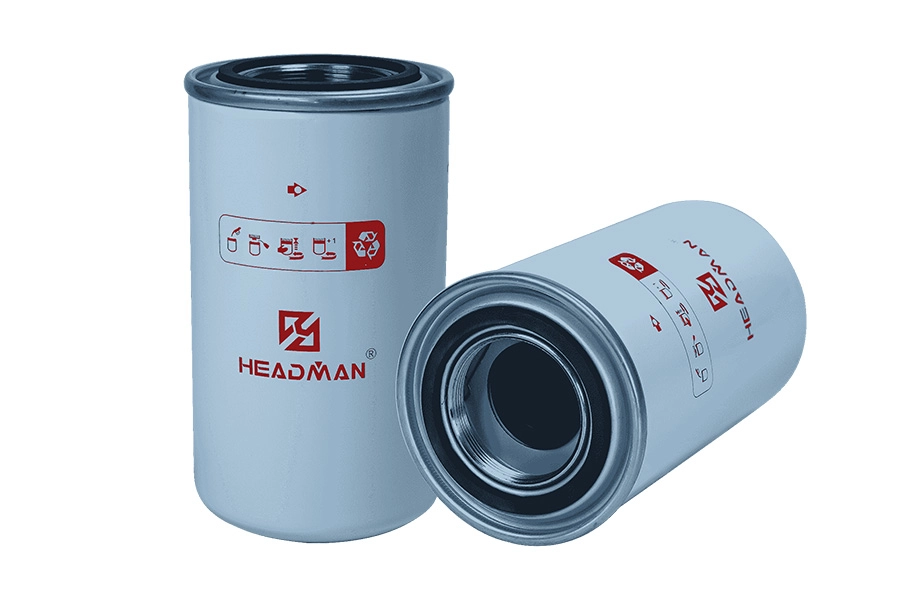
Selecting a Hydraulic Filter Element requires attention to both filtration rating and actual particle-removal efficiency. A micron rating alone does not fully describe performance. For comparable test conditions, the Beta ratio under ISO 16889 provides a more meaningful measure of filtration efficiency. For example, a beta ratio of 200 at a specified particle size corresponds to 99.5% removal efficiency at that size under the defined test conditions. The actual rating must be verified for the specific filter model.
Hydraulic pumps convert mechanical energy into fluid power, and their internal components depend on suitable lubrication, clearances, and fluid conditions. When contaminated oil passes through a pump, hard particles can cause abrasive wear on precision surfaces. As wear progresses, internal leakage may increase, reducing volumetric efficiency and affecting the system's ability to maintain the required flow and pressure.
An appropriately selected Hydraulic Filter Element helps reduce the circulation of damaging particles and limits contamination-related wear. Its protective value depends on the filter's location, filtration efficiency, flow capacity, and compatibility with the hydraulic circuit. Pressure-line filtration can protect downstream components, while return-line filtration helps remove contaminants from oil returning to the reservoir before it re-enters the system.
Filtration cannot eliminate every cause of pump failure. Incorrect installation, inadequate lubrication, excessive operating temperature, cavitation, and unsuitable fluid viscosity can also damage pumps. Effective contamination control should therefore form part of a broader hydraulic maintenance strategy that includes proper fluid selection, condition monitoring, and inspection of the complete system.
Hydraulic valves regulate flow direction, pressure, and actuator movement. Some valve designs contain small clearances and precision control passages that are particularly sensitive to particulate contamination. Particles trapped between moving surfaces may interfere with spool movement, obstruct narrow passages, or damage metering edges. These problems can lead to valve sticking, inconsistent response, pressure instability, or reduced control accuracy.
Proportional and servo valves may require stricter fluid cleanliness than less contamination-sensitive components. Choosing a suitable Hydraulic Filter Element can help maintain the cleanliness level specified by the equipment or valve manufacturer. The correct selection should consider particle size, filtration efficiency, flow demand, and the required cleanliness target rather than relying on a universal micron rating.
A filter also needs sufficient dirt-holding capacity to maintain performance as contaminants accumulate. If the element becomes excessively loaded, differential pressure can rise and restrict flow. Monitoring filter condition and replacing the element when required help maintain effective protection for sensitive hydraulic components.
Filter media is only one part of overall filtration performance. The element's support layers, end caps, bonding, and sealing interfaces also matter. These structural features help maintain the intended flow path and prevent the media from deforming under operating loads. If the element collapses, becomes damaged, or develops a seal failure, contaminants may pass downstream and undermine filtration performance.
Differential pressure is another important parameter. It represents the pressure difference between the inlet and outlet sides of the filter. As captured particles accumulate, resistance to flow generally increases. A filter with suitable flow capacity and dirt-holding characteristics can help control pressure drop and extend practical service intervals, provided it is correctly sized for the application.
Some hydraulic filter assemblies include a bypass valve or a clogging indicator. A bypass valve may open when differential pressure reaches its designed setting, allowing fluid to continue flowing when the element becomes restricted. However, bypass operation can also allow unfiltered oil to reach downstream components. It should be treated as a protective design feature, not a substitute for timely filter maintenance. A clogging indicator or pressure gauge can help operators identify when inspection is necessary.
The first step is to identify the filter's position in the hydraulic circuit. Pressure-line, return-line, and suction filters operate under different pressure and flow conditions, so their structural requirements and filtration duties are not interchangeable. The replacement element must match the original assembly or the equipment manufacturer's approved specifications.
Next, confirm the required filtration rating, flow capacity, operating pressure, differential-pressure limits, and hydraulic fluid compatibility. Seal materials must also suit the fluid and temperature range. For systems containing sensitive proportional or servo valves, the required cleanliness target should guide the filtration specification. Where applicable, ISO 4406 cleanliness codes and ISO 16889 filtration-efficiency data can support a more systematic selection process.
Avoid choosing a filter solely because its dimensions appear correct or its advertised micron rating is lower. An unsuitable element may create excessive flow resistance, fail to provide the expected efficiency, or lack sufficient structural strength. The best solution balances contaminant removal, hydraulic performance, compatibility, service life, and maintenance requirements.
A complete hydraulic filter assembly integrates the filter element with its housing and sealing components. Depending on the configuration, it may also include a bypass valve, clogging indicator, pressure gauge, or magnetic core. These components support installation, filtration, and maintenance, but their suitability depends on the specific hydraulic circuit and operating conditions.
According to its published product information, Headman offers hydraulic filter element assemblies in multiple configurations for construction machinery, industrial equipment, agricultural machinery, mining equipment, and other hydraulic applications. The company's product range lists filtration ratings of 3, 5, 10, 20, and 25 microns, with typical assembly operating pressures of 10–40 MPa and flow capacities of 20–600 L/min. These are published ranges across the product series, not specifications applicable to every model.
Headman's product information also describes options such as clogging indicators, pressure gauges, and magnetic cores. For equipment manufacturers, hydraulic system integrators, distributors, and maintenance providers, selecting the appropriate assembly requires checking the exact model, connection dimensions, rated flow, operating pressure, filtration performance, and fluid compatibility. Reviewing these details before installation helps reduce mismatch risks and supports reliable operation.
Even a high-efficiency Hydraulic Filter Element cannot protect a system effectively if it is installed incorrectly or replaced without controlling contamination. Before installation, verify the replacement model and inspect the housing and sealing surfaces. Ensure that the assembly is clean, the flow direction is correct, and all connections are properly secured.
During operation, monitor differential pressure where an indicator or gauge is available, and follow the equipment manufacturer's inspection and replacement recommendations. A rapid increase in differential pressure may indicate heavy contamination loading, unsuitable oil viscosity, or another restriction that requires investigation. When replacing the element, depressurize the system according to the equipment manufacturer's safety procedures and keep exposed hydraulic connections clean to prevent new contaminants from entering.
It is also important to distinguish solid-particle filtration from other fluid-conditioning needs. A conventional particulate filter does not automatically remove dissolved contaminants or eliminate water contamination. If water ingress, oxidation, or chemical fluid degradation is suspected, additional testing and appropriate treatment may be necessary.

 Whatapp: +86-15305732238


